
Description
Product Overview
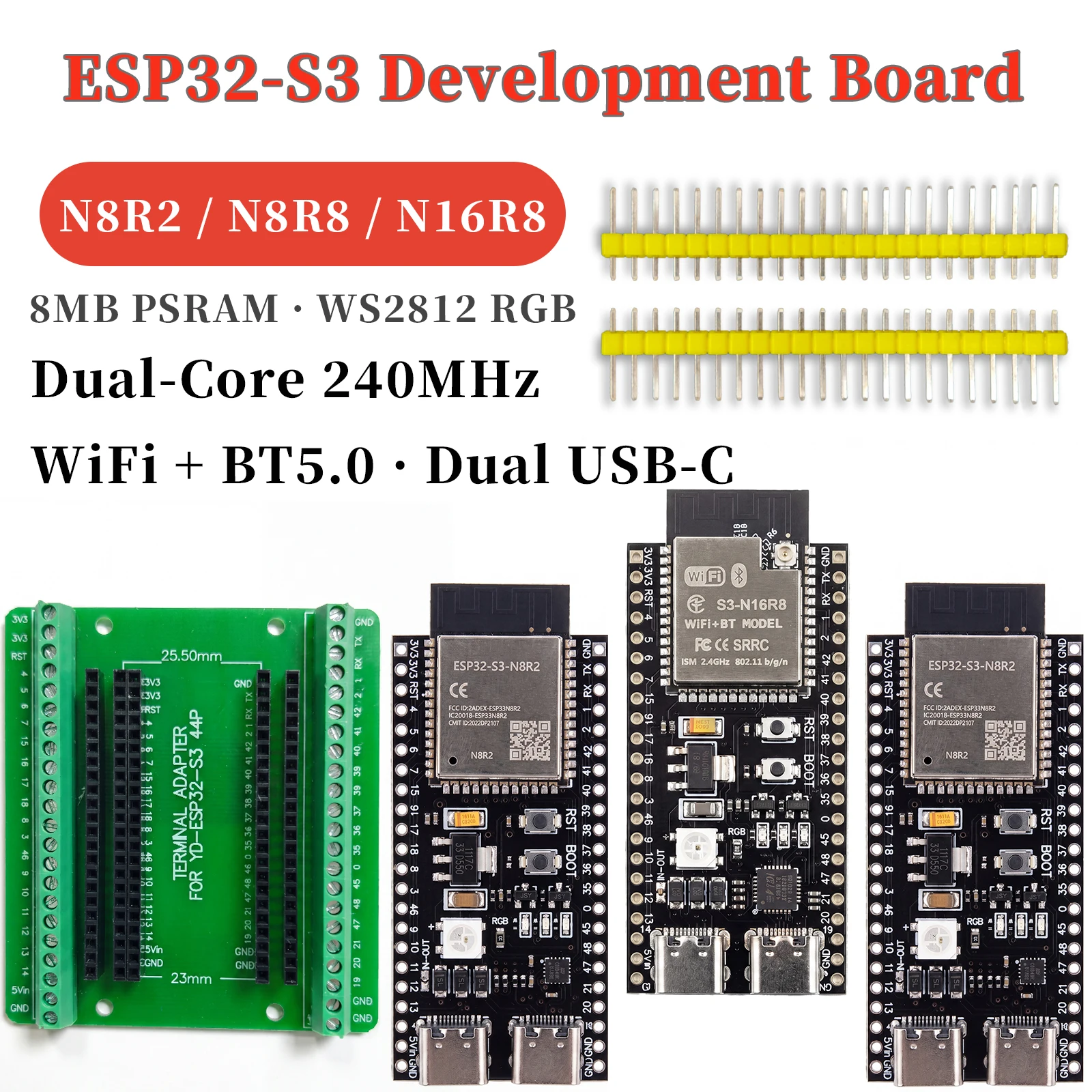
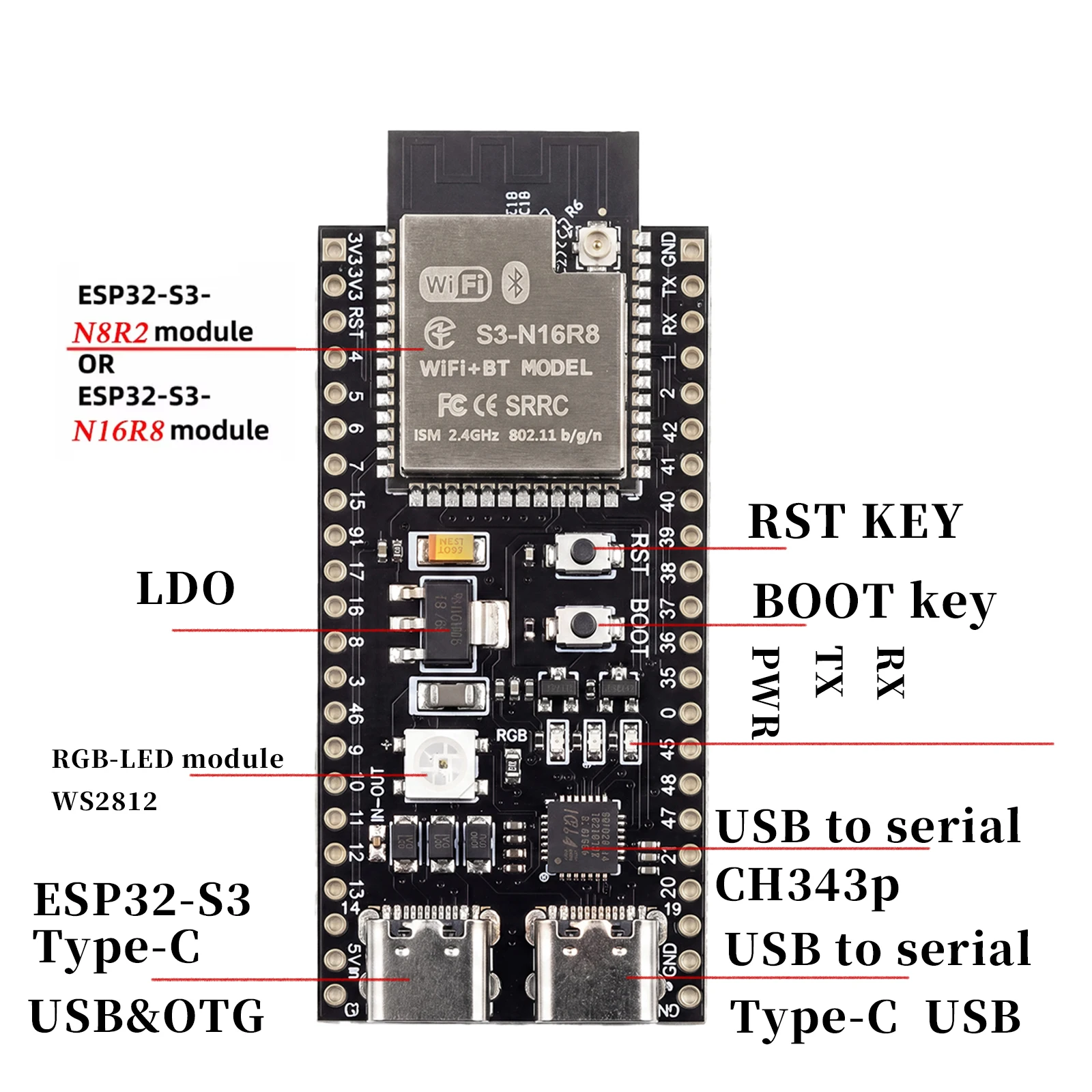
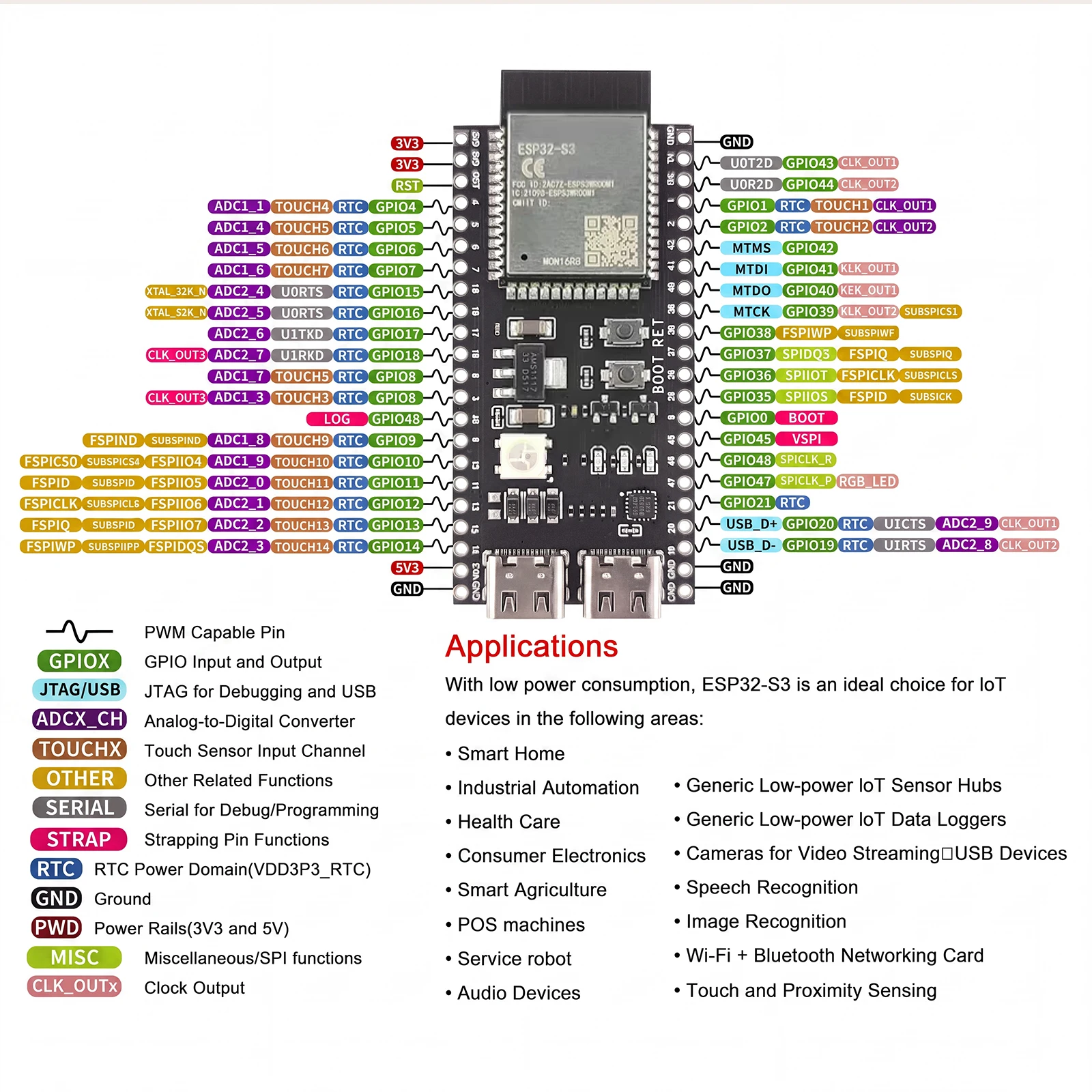
This development board is built around the Espressif ESP32‑S3 chip, featuring a dual‑core Xtensa LX7 @ 240MHz, 2.4GHz Wi‑Fi + Bluetooth 5.0 (LE), built‑in AI vector instructions, native USB‑OTG, and 45 programmable GPIOs with support for LCD and camera interfaces. Onboard peripherals include a PCB antenna, dual USB‑C ports (USB‑OTG direct + CH343P UART bridge), a WS2812 RGB LED, RST/BOOT buttons, and PWR/TX/RX status LEDs. Header holes are provided on both sides, with two matching header strips included (unsoldered) – you can solder them yourself upon receipt. This listing offers three module board variants (N8R2 / N8R8 / N16R8) plus a 44‑pin expansion base, total 4 SKUs.
Specifications
Chip-——ESP32‑S3 (Espressif, ESP32‑S3‑WROOM‑1 series module)
CPU-——Dual‑core 32‑bit Xtensa LX7 @ 240MHz |
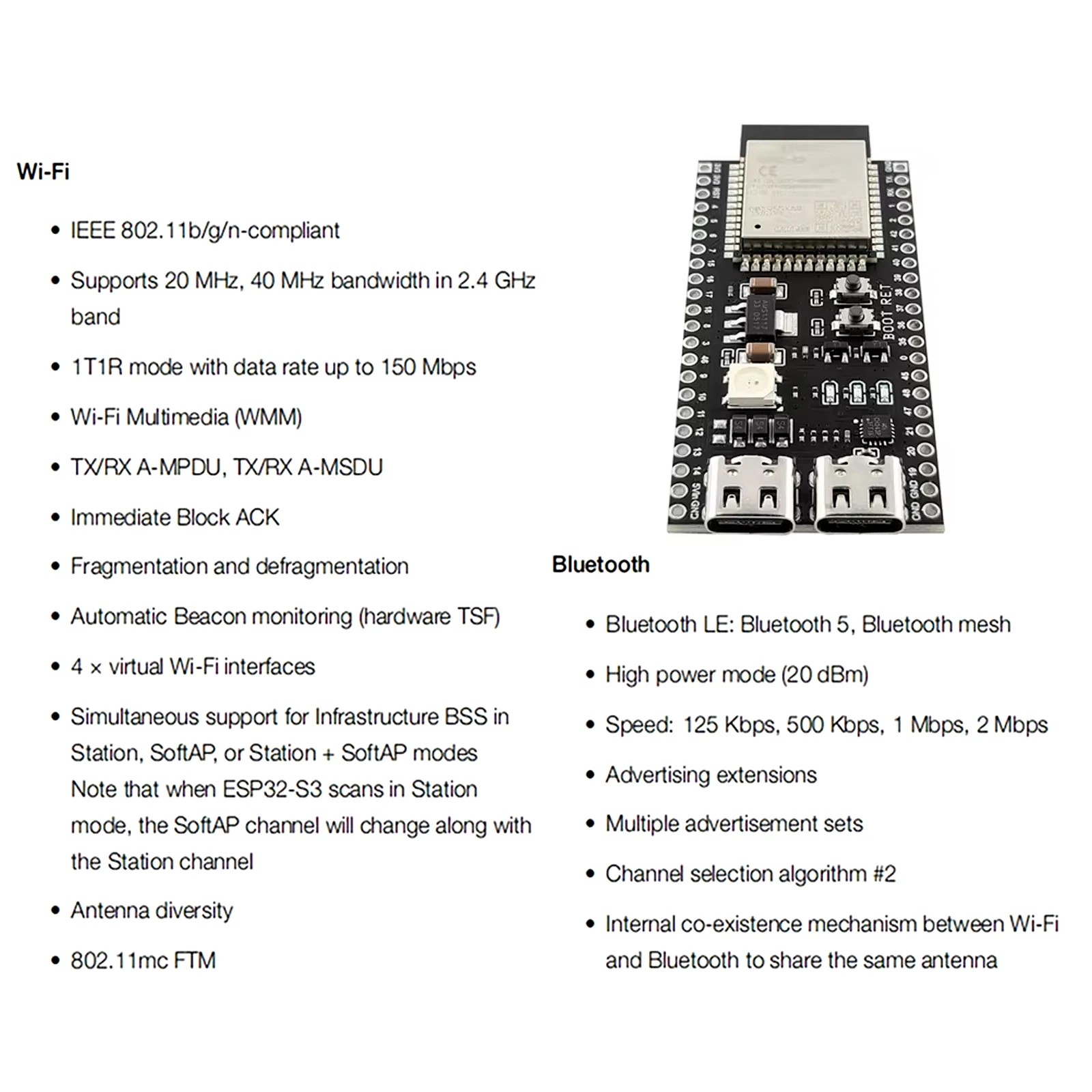
| Wi‑Fi -—— 802.11 b/g/n, 2.4GHz, up to 150Mbps |
| Bluetooth-——Bluetooth 5.0 (LE), supports mesh |
| SRAM / ROM-——512KB SRAM / 384KB ROM |
| Flash / PSRAM -——See SKU table |
| GPIO -—— 45 programmable GPIOs |
| ADC -—— 2× 12‑bit SAR ADC, up to 20 channels |
| Interfaces -—— 4×SPI, 3×UART, 2×I2C, 2×I2S, LCD, DVP camera, USB‑OTG, TWAI(CAN) |
| USB -—— Dual USB‑C (USB‑OTG direct + CH343P UART bridge) |
| Onboard Peripherals -—— WS2812 RGB LED, RST/BOOT buttons, PWR/TX/RX LEDs |
| Power Supply -—— USB‑C powered, 3V–3.6V |
| Operating Temp. -—— ‑40℃ ~ +65℃ |
| Security -—— AES/SHA/RSA/ECC/RNG, secure boot, flash encryption |
| Development Env. -—— Arduino / MicroPython (Thonny) / ESP‑IDF / PlatformIO |
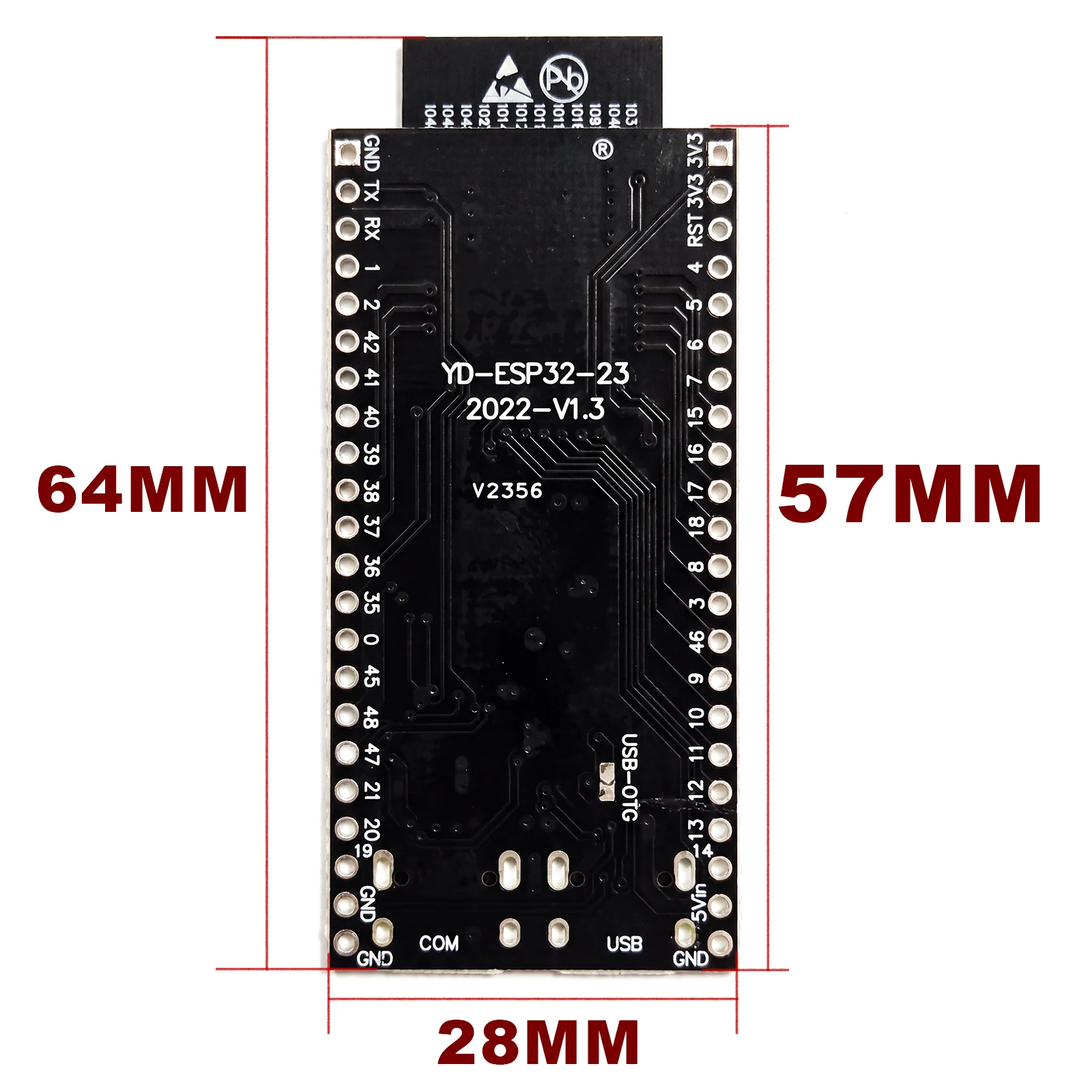
| Headers -—— Header holes on left/right sides; two matching strips included (unsoldered) |
Programming Methods
– Both USB‑OTG direct and UART serial interfaces support program downloading (both Type‑C ports work).
– On Windows, you can use the official flash_download_tool, select chip ESP32‑S3, and choose mode USB or UART.
Q1: What are the differences between N8R2, N8R8, and N16R8?
A1: They differ in Flash and PSRAM: N8R2 = 8MB Flash + 2MB PSRAM; N8R8 = 8MB Flash + 8MB PSRAM; N16R8 = 16MB Flash + 8MB PSRAM. Larger PSRAM is better for memory‑intensive applications like cameras, TFT displays, and AI, and the memory configurations are backward compatible.
Q2: Are the headers pre‑soldered?
A2: No. The board has header holes on both sides, and two matching header strips are included – you need to solder them yourself after you receive the board.
Q3: What is the 44‑pin expansion board?
A3:It is a separate breakout/base adapter board for inserting an ESP32‑S3 module, making all pins accessible for easy wiring. It requires a separate module purchase.
Q4: What do the two USB‑C ports do?
A4:One is the native USB‑OTG port of the ESP32‑S3 (can act as keyboard/mouse/USB drive), the other is a CH343P UART bridge for programming and serial debugging.
Q5: Which development environments are supported?
A5:Arduino, MicroPython (Thonny recommended), Espressif ESP‑IDF, and PlatformIO – all with mature ecosystems.
Q6: Can it run AI / camera / display applications?
A6:Yes. The ESP32‑S3 has AI vector instructions and interfaces for LCD and DVP cameras, enabling image recognition, voice wake‑up, TFT display, and other AIoT applications.


Reviews
There are no reviews yet.